Nassera Dutour faces entry ban in Algeria for her human rights activism
Name(s):
Nassera Dutour
Status:
Free
Profession:
President of the CFDA & the FEMED
Nationality:
Algerian
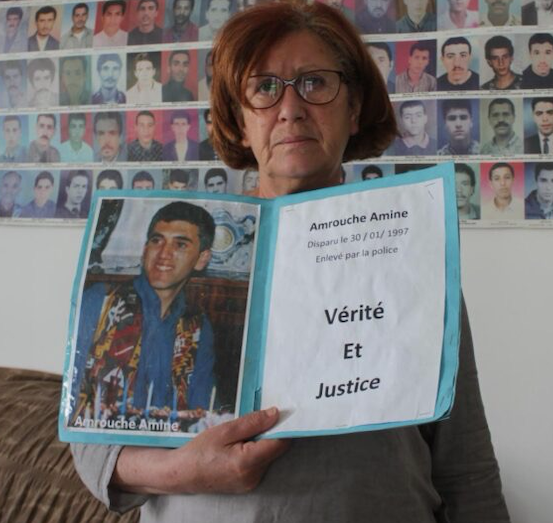
Nassera Dutour is an Algerian human rights defender, founder of SOS of Disparus, and president of the Collectif des Familles des Disparus en Algérie (CFDA) and the Euro-Mediterranean Federation against Enforced Disappearances FEMED. Through her work, Dutour often engages with UN human rights mechanisms and experts. Following her participation in the UN Human Rights Council in June 2025, she was arbitrarily denied entry into Algeria upon returning from Europe. In addition, the authorities sealed off the headquarters of SOS Disparus in Algiers in March 2026, making it nearly impossible for the organisation to continue operating in the country.
Nassera Dutour is an Algerian human rights defender and founder of SOS Disparus and president of the Collectif des Familles des Disparus en Algérie (CFDA), two sister organisations working for truth and justice for victims of enforced disappearances linked to Algeria’s “Black Decade.” While SOS Disparus operates in Algeria, providing support and assistance to victims’ families, the CFDA, based in France, leads international advocacy efforts before UN and regional human rights mechanisms. She is also president of the Euro-Mediterranean Federation against Enforced Disappearances (FEMED), which works on enforced disappearances at the regional level. Through her work with both organisations, she engages extensively with UN human rights protection mechanisms.
In June 2025, Dutour participated as part of the Francophone Feminist Alliance delegation at the 59th session of the Human Rights Council in Geneva. She took part in numerous bilateral meetings with states and UN mechanisms concerning the defence of women’s rights and the fight against patriarchal violence. She also spoke at a side event organised by the International Federation for Human Rights on June 25 entitled “the exacerbation of discriminatory norms and sexual and gender-based violence during armed conflicts in the MENA region”. On July 30, 2025, Dutour arrived at Houari Boumediene Airport in Algiers after returning from Europe but was denied entry despite presenting a valid Algerian passport. She was detained for three hours by border police and questioned about her community work, and was subsequently issued a refusal-of-entry measure. The border police provided no legal justification for this measure, simply citing her status as a “member of an NGO”. Dutour was subsequently deported to France, the country from which she had arrived.
On August 29, 2025, UN human rights experts issued a communication to the Algerian authorities, expressing concern over the entry ban imposed on Dutour. They recalled Algeria’s obligation under international human rights law and noted that the measure appeared to violate article 49 of the Algerian Constitution, which guarantees the right to freedom of movement.
In September 2025, Dutour delivered a statement before the UN Human Rights Council during the presentation of the UN Secretary-General annual report on reprisals and engaged with the UN Working Group on Enforced or Involuntary Disappearances. Sshe also met with several Special Rapporteurs, including those on human rights defenders, freedom of association and peaceful assembly, transitional justice, and freedom of expression, and contributed to a civil-society mid-term assessment report evaluating Algeria’s implementation of recommendations received during its Universal Periodic Review (UPR).
On March 16, 2026, police officers and local authorities arrived at the SOS Disparus headquarters in Algiers with an order to close and seal the premises. The operation reportedly stemmed from an administrative decision adopted a few days earlier.
On March 18, 2026, during a weekly gathering facilitated by SOS Disparus, five relatives of missing persons encountered a significant police presence and were ordered to disperse. The families subsequently went to the SOS Disparus headquarters, where they took photos and sat on the steps. Shortly thereafter, eight police officers intervened and escorted them to the Cavaignac police station, where they were questioned about their identities and later released. One individual, Slimane Hamitouche, was separated from the group and taken to an unknown location. His relatives and the association had no news of him until 6.30 pm that day.
SOS Disparus has played a central role for over two decades in supporting families and victims of enforced disappearance in Algeria. The organisation documents cases, preserves memory and defends the right to truth and justice. The closure of its headquarters risks severely undermining families’ ability to organise, meet and have their voices heard.
On April 15, 2026, MENA Rights Group referred Dutour’s case to the UN Secretary-General ahead of the preparation of the annual report on intimidation and reprisals for cooperation with the UN in the field of human rights.
| Name(s): |
Nassera Dutour
|
| Status: |
Free
|
| Profession: |
President of the CFDA & the FEMED
|
| Nationality: |
Algerian
|
Nassera Dutour is an Algerian human rights defender and founder of SOS Disparus and president of the Collectif des Familles des Disparus en Algérie (CFDA), two sister organisations working for truth and justice for victims of enforced disappearances linked to Algeria’s “Black Decade.” While SOS Disparus operates in Algeria, providing support and assistance to victims’ families, the CFDA, based in France, leads international advocacy efforts before UN and regional human rights mechanisms. She is also president of the Euro-Mediterranean Federation against Enforced Disappearances (FEMED), which works on enforced disappearances at the regional level. Through her work with both organisations, she engages extensively with UN human rights protection mechanisms.
In June 2025, Dutour participated as part of the Francophone Feminist Alliance delegation at the 59th session of the Human Rights Council in Geneva. She took part in numerous bilateral meetings with states and UN mechanisms concerning the defence of women’s rights and the fight against patriarchal violence. She also spoke at a side event organised by the International Federation for Human Rights on June 25 entitled “the exacerbation of discriminatory norms and sexual and gender-based violence during armed conflicts in the MENA region”. On July 30, 2025, Dutour arrived at Houari Boumediene Airport in Algiers after returning from Europe but was denied entry despite presenting a valid Algerian passport. She was detained for three hours by border police and questioned about her community work, and was subsequently issued a refusal-of-entry measure. The border police provided no legal justification for this measure, simply citing her status as a “member of an NGO”. Dutour was subsequently deported to France, the country from which she had arrived.
On August 29, 2025, UN human rights experts issued a communication to the Algerian authorities, expressing concern over the entry ban imposed on Dutour. They recalled Algeria’s obligation under international human rights law and noted that the measure appeared to violate article 49 of the Algerian Constitution, which guarantees the right to freedom of movement.
In September 2025, Dutour delivered a statement before the UN Human Rights Council during the presentation of the UN Secretary-General annual report on reprisals and engaged with the UN Working Group on Enforced or Involuntary Disappearances. Sshe also met with several Special Rapporteurs, including those on human rights defenders, freedom of association and peaceful assembly, transitional justice, and freedom of expression, and contributed to a civil-society mid-term assessment report evaluating Algeria’s implementation of recommendations received during its Universal Periodic Review (UPR).
On March 16, 2026, police officers and local authorities arrived at the SOS Disparus headquarters in Algiers with an order to close and seal the premises. The operation reportedly stemmed from an administrative decision adopted a few days earlier.
On March 18, 2026, during a weekly gathering facilitated by SOS Disparus, five relatives of missing persons encountered a significant police presence and were ordered to disperse. The families subsequently went to the SOS Disparus headquarters, where they took photos and sat on the steps. Shortly thereafter, eight police officers intervened and escorted them to the Cavaignac police station, where they were questioned about their identities and later released. One individual, Slimane Hamitouche, was separated from the group and taken to an unknown location. His relatives and the association had no news of him until 6.30 pm that day.
SOS Disparus has played a central role for over two decades in supporting families and victims of enforced disappearance in Algeria. The organisation documents cases, preserves memory and defends the right to truth and justice. The closure of its headquarters risks severely undermining families’ ability to organise, meet and have their voices heard.
On April 15, 2026, MENA Rights Group referred Dutour’s case to the UN Secretary-General ahead of the preparation of the annual report on intimidation and reprisals for cooperation with the UN in the field of human rights.