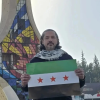
Egyptian poet detained in the UAE after extradition from Lebanon
Name(s):
Abdelrahman Youssef al-Qaradawi
Status:
Detained
Year of birth:
1970
Profession:
Poet
Nationality:
Turkish and Egyptian
Date of arrest:
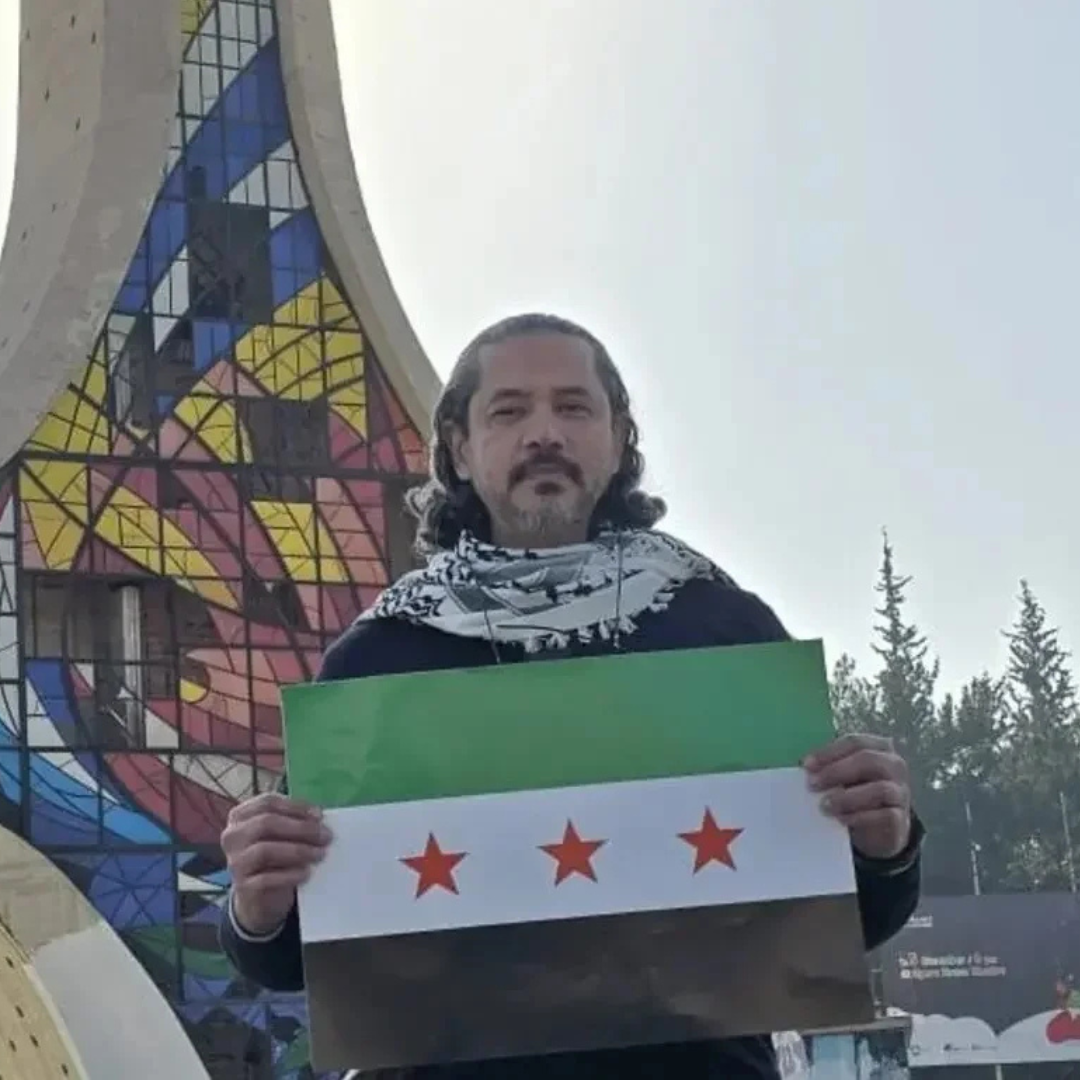
Abdulrahman al-Qaradawi is an Egyptian-Turkish poet arrested by Lebanese authorities on December 28, 2024, at Egypt’s request. Following a second warrant issued by Emirati authorities, he was extradited from Lebanon to the UAE on January 8, 2025, in violation of international law. He has since remained in near-incommunicado detention in the UAE despite global calls from the UN and human rights organisations for his release.
Abdulrahman al-Qaradawi is an Egyptian-Turkish citizen living and working in Turkey. He is also a well-known poet, artist and activist of Egyptian descent whose creative work reflects his thoughts, opinions and concerns about political and social issues across the Middle East and North Africa region. His art and poetry have long included expressions of criticism and concern regarding the policies and practices of the Egyptian Government, dating as far back as 2010 when he lived in Egypt and sought to foster a culture of peace, freedom and respect for all.
Al-Qaradawi is the son of the late Sheikh Yusuf al-Qaradawi, who was a well-known and prominent Egyptian Islamic Scholar repeatedly targeted for his opinions and thoughts. This targeting extended to his family as well, with Human Rights Watch recognising that Sheikh Yusuf al-Qaradawi’s family – including al-Qaradawi and his sister and brother in-law, Ola al-Qaradawi and Hosam Khalaf – have been subjected to a pattern of targeting of families in Egypt of activists and human rights defenders living abroad. Importantly, Human Rights Watch has called this treatment a “clear pattern of intimidation and harassment” while naming the al-Qaradawi family as being among a group of families experiencing “acts of reprisal against their relatives.”
On December 28, 2024, al-Qaradawi was arrested and detained in Lebanon at the Syrian-Lebanese Masnaa border crossing by Lebanese General Security officers. Al-Qaradawi was returning from Damascus, where he spent some time to celebrate the fall of the Assad regime. At the time of his travel, the Damascus international airport was not operational and the only way to go in and out of Syria was through Beirut and the Masnaa border crossing.
Upon arrest, he was transferred to the Procedure and Investigation Department of the General Security Directorate in Beirut and detained. His arrest was initially based on an extradition request issued by Egyptian authorities, where al-Qaradawi had notably been sentenced in absentia to five years in prison in 2017 for acts related to his exercise of freedom of expression, namely on charges of insulting the judiciary. This case was widely criticised as politically motivated and a violation of fair trial standards.
A day later, on December 29, 2024, another warrant was also issued by Emirati authorities and circulated by the same body of AIMC on charges of “engaging in activities that aim to stir and undermine public security”. This charge stems from a video he posted while in Syria at the Umayyad Mosque, in which he criticised the human rights records of Gulf countries and expressed hope that they would face the same fate as the Assad regime. These charges were brought by the United Arab Emirates (UAE), despite the fact that he is neither a national nor a resident of the UAE and has no connection to the country whatsoever.
On December 30, 2024, al-Qaradawi was interrogated by a Lebanese security officer for about three hours, in relation to his 2017 in absentia sentencing in Egypt, as well as the UAE’s extradition request.
On January 2, 2025, the Ministry of Justice reportedly received the UAE’s request for the extradition of al-Qaradawi, through the Lebanese Ministry of Foreign Affairs, and referred the case to the Office of the Public Prosecution of the Court of Cassation. The Public Prosecutor interrogated al-Qaradawi in the presence of his legal representative.
On January 3, 2025, al-Qaradawi’s legal representative submitted a memorandum to the Public Prosecutor at the Cassation Court, urging the prosecutor to issue a recommendation rejecting the extradition requests by Egypt and the UAE, citing risks of violating the principle of non-refoulement as enshrined in article 3 of the Convention against Torture. Despite this, on the same day, the Public Prosecutor submitted its report to the Ministry of Justice, recommending that al-Qaradawi’s extradition request to the UAE should be accepted. The Public Prosecutor notably held that the alleged offense committed by al-Qaradawi “harmed the security of the requesting State or its financial standing”, grounds which permit extradition according to article 31 of the Lebanese Penal Code, and asserted that the facts of the case at the basis of the extradition request did not suggest that the alleged offence was political in nature. Lebanese media also reported that the judicial report on the UAE’s extradition request had been submitted to the cabinet secretary general for review, and that a decision was expected to be issued during the cabinet session of January 7, 2025. It was also reported that the Lebanese authorities were inclined to approve the UAE’s extradition request, while the Egyptian authorities' extradition request was incomplete.
On January 6, 2025, an urgent appeal was sent to the Lebanese authorities by UN human rights experts, highlighting the significant risk that al-Qaradawi would be subjected to torture or other forms of ill-treatment and to enforced disappearance if he is extradited to Egypt or to the UAE. Moreover, between 6 and 7 January 2025, over 500 individuals and organisations called on the Lebanese authorities to release al-Qaradawi and to refrain from extraditing him.
Despite this, on January 7, 2025, the Lebanese Government issued a decision approving the deportation of Al-Qaradawi to the UAE. The decision was issued during the country’s presidential vacancy, just two days before the election of President Joseph Aoun on 9 January 2025.
On January 8, 2025, al-Qaradawi’s lawyer appealed the deportation order before the Council of State (State Shura Council), Lebanon’s highest administrative court. The appeal highlighted the caretaker government’s lack of competence to rule on the extradition, the lack of consideration of the political nature of charges at the basis of extradition requests and the torture risks in the UAE in accordance with Lebanon’s international obligations. On the same day, UN Special Procedures published a press release calling on the authorities to stop al-Qaradawi’s extradition to the UAE, citing a risk of “torture, ill-treatment or enforced disappearance”.
Later that day, despite a pending appeal, the government proceeded with the deportation, and al-Qaradawi was deported to the UAE. The extradition was carried out by the UAE-based airline company Royal Jet, despite receiving a letter from MENA Rights Group explaining that the airline would be playing an active role in violating article 3 of the Convention against Torture, which enshrines the principle of non-refoulement. This company was also involved in the wrongful extradition of Bahraini dissident from Serbia in 2022. The aircraft used was registered under number A6-RJA.
On January 10, 2025, the Emirates News Agency (WAM) announced that the Emirate authorities “have taken into custody defendant Abdul Rahman Al-Qaradawi from the Lebanese authorities pursuant to a provisional arrest warrant issued against him by the General Secretariat of the Arab Interior Ministers' Council - Criminal Investigation and Data Bureau, at the request of the competent authorities in the UAE”. They added that “Abdul Rahman Al-Qaradawi faces charges of engaging in activities that aim to stir and undermine public security”.
Since then, al-Qaradawi has remained detained in near-incommunicado detention in the UAE. His family and his Lebanese lawyer have received no information about his fate and whereabouts. Reportedly he is held in solitary confinement, in a cell with no access to natural light or fresh air and subjected to audiovisual surveillance.
On January 14, 2025, the Cedar Centre for Legal Studies, MENA Rights Group and Emirates Detainee Advocacy Center submitted an urgent appeal to the Working Group on Enforced or Involuntary Disappearance (WGEID), urging the UAE to disclose his fate and whereabouts and release him immediately.
On January 22, 2025, the WGEID sent a communication to the Government of the UAE.
On February 20, 2025, several UN human rights experts sent an urgent communication to the UAE government concerning the alleged enforced disappearance of al-Qaradawi. They expressed concern that, since his extradition to the UAE, his fate and whereabouts have remained unknown. They requested that the UAE clarify al-Qaradawi’s whereabouts, provide detailed information on the reasons for his detention, and explain any charges that may have been brought against him.
UN Special Procedures issued a press release on March 5, 2025 calling on the UAE to disclose the fate and whereabouts of al-Qaradawi, who was forcibly disappeared.
On October 23, 2025, the State Shura Council rejected the appeal that had been filed by al-Qaradawi’s legal representative on 8 January. The council’s decision claimed that all the legal conditions to accept the extradition request had been met, as article 31 of the Lebanese Penal Code permits extraditions for offenses that harm the security of the requesting state of its financial standing.
On November 24, 2025, several UN human rights experts sent two separate UN communications to the UAE and Lebanese authorities. The former highlighting sincere concern regarding the circumstances surrounding al-Qaradawi’s detainment; particularly its arbitrary nature and his confinement conditions. The latter questioning the legality of al-Qaradawi’s extradition, particularly in regards to Lebanon’s non-refoulement obligations under international law.
The only known contact with al-Qaradawi occurred on March 23, 2025, and on 24 August 2025 during two short and heavily monitored visits in Abu Dhabi by his family that lasted less than ten minutes in a facility not officially recognised as a place of detention.
On January 12, 2026, just over one year after al-Qaradawi’s extradition, MENA Rights Group and Human Rights Watch issued a joint news release, urging Lebanese authorities to open an independent investigation into the circumstances surrounding al-Qaradawi’s unlawful extradition, and to cease participation in transnational repression, including by refusing extradition requests circulated by the Arab Interior Ministers Council.
| Name(s): |
Abdelrahman Youssef al-Qaradawi
|
| Status: |
Detained
|
| Year of birth: |
1970
|
| Profession: |
Poet
|
| Nationality: |
Turkish and Egyptian
|
| Date of arrest: |
|
Abdulrahman al-Qaradawi is an Egyptian-Turkish citizen living and working in Turkey. He is also a well-known poet, artist and activist of Egyptian descent whose creative work reflects his thoughts, opinions and concerns about political and social issues across the Middle East and North Africa region. His art and poetry have long included expressions of criticism and concern regarding the policies and practices of the Egyptian Government, dating as far back as 2010 when he lived in Egypt and sought to foster a culture of peace, freedom and respect for all.
Al-Qaradawi is the son of the late Sheikh Yusuf al-Qaradawi, who was a well-known and prominent Egyptian Islamic Scholar repeatedly targeted for his opinions and thoughts. This targeting extended to his family as well, with Human Rights Watch recognising that Sheikh Yusuf al-Qaradawi’s family – including al-Qaradawi and his sister and brother in-law, Ola al-Qaradawi and Hosam Khalaf – have been subjected to a pattern of targeting of families in Egypt of activists and human rights defenders living abroad. Importantly, Human Rights Watch has called this treatment a “clear pattern of intimidation and harassment” while naming the al-Qaradawi family as being among a group of families experiencing “acts of reprisal against their relatives.”
On December 28, 2024, al-Qaradawi was arrested and detained in Lebanon at the Syrian-Lebanese Masnaa border crossing by Lebanese General Security officers. Al-Qaradawi was returning from Damascus, where he spent some time to celebrate the fall of the Assad regime. At the time of his travel, the Damascus international airport was not operational and the only way to go in and out of Syria was through Beirut and the Masnaa border crossing.
Upon arrest, he was transferred to the Procedure and Investigation Department of the General Security Directorate in Beirut and detained. His arrest was initially based on an extradition request issued by Egyptian authorities, where al-Qaradawi had notably been sentenced in absentia to five years in prison in 2017 for acts related to his exercise of freedom of expression, namely on charges of insulting the judiciary. This case was widely criticised as politically motivated and a violation of fair trial standards.
A day later, on December 29, 2024, another warrant was also issued by Emirati authorities and circulated by the same body of AIMC on charges of “engaging in activities that aim to stir and undermine public security”. This charge stems from a video he posted while in Syria at the Umayyad Mosque, in which he criticised the human rights records of Gulf countries and expressed hope that they would face the same fate as the Assad regime. These charges were brought by the United Arab Emirates (UAE), despite the fact that he is neither a national nor a resident of the UAE and has no connection to the country whatsoever.
On December 30, 2024, al-Qaradawi was interrogated by a Lebanese security officer for about three hours, in relation to his 2017 in absentia sentencing in Egypt, as well as the UAE’s extradition request.
On January 2, 2025, the Ministry of Justice reportedly received the UAE’s request for the extradition of al-Qaradawi, through the Lebanese Ministry of Foreign Affairs, and referred the case to the Office of the Public Prosecution of the Court of Cassation. The Public Prosecutor interrogated al-Qaradawi in the presence of his legal representative.
On January 3, 2025, al-Qaradawi’s legal representative submitted a memorandum to the Public Prosecutor at the Cassation Court, urging the prosecutor to issue a recommendation rejecting the extradition requests by Egypt and the UAE, citing risks of violating the principle of non-refoulement as enshrined in article 3 of the Convention against Torture. Despite this, on the same day, the Public Prosecutor submitted its report to the Ministry of Justice, recommending that al-Qaradawi’s extradition request to the UAE should be accepted. The Public Prosecutor notably held that the alleged offense committed by al-Qaradawi “harmed the security of the requesting State or its financial standing”, grounds which permit extradition according to article 31 of the Lebanese Penal Code, and asserted that the facts of the case at the basis of the extradition request did not suggest that the alleged offence was political in nature. Lebanese media also reported that the judicial report on the UAE’s extradition request had been submitted to the cabinet secretary general for review, and that a decision was expected to be issued during the cabinet session of January 7, 2025. It was also reported that the Lebanese authorities were inclined to approve the UAE’s extradition request, while the Egyptian authorities' extradition request was incomplete.
On January 6, 2025, an urgent appeal was sent to the Lebanese authorities by UN human rights experts, highlighting the significant risk that al-Qaradawi would be subjected to torture or other forms of ill-treatment and to enforced disappearance if he is extradited to Egypt or to the UAE. Moreover, between 6 and 7 January 2025, over 500 individuals and organisations called on the Lebanese authorities to release al-Qaradawi and to refrain from extraditing him.
Despite this, on January 7, 2025, the Lebanese Government issued a decision approving the deportation of Al-Qaradawi to the UAE. The decision was issued during the country’s presidential vacancy, just two days before the election of President Joseph Aoun on 9 January 2025.
On January 8, 2025, al-Qaradawi’s lawyer appealed the deportation order before the Council of State (State Shura Council), Lebanon’s highest administrative court. The appeal highlighted the caretaker government’s lack of competence to rule on the extradition, the lack of consideration of the political nature of charges at the basis of extradition requests and the torture risks in the UAE in accordance with Lebanon’s international obligations. On the same day, UN Special Procedures published a press release calling on the authorities to stop al-Qaradawi’s extradition to the UAE, citing a risk of “torture, ill-treatment or enforced disappearance”.
Later that day, despite a pending appeal, the government proceeded with the deportation, and al-Qaradawi was deported to the UAE. The extradition was carried out by the UAE-based airline company Royal Jet, despite receiving a letter from MENA Rights Group explaining that the airline would be playing an active role in violating article 3 of the Convention against Torture, which enshrines the principle of non-refoulement. This company was also involved in the wrongful extradition of Bahraini dissident from Serbia in 2022. The aircraft used was registered under number A6-RJA.
On January 10, 2025, the Emirates News Agency (WAM) announced that the Emirate authorities “have taken into custody defendant Abdul Rahman Al-Qaradawi from the Lebanese authorities pursuant to a provisional arrest warrant issued against him by the General Secretariat of the Arab Interior Ministers' Council - Criminal Investigation and Data Bureau, at the request of the competent authorities in the UAE”. They added that “Abdul Rahman Al-Qaradawi faces charges of engaging in activities that aim to stir and undermine public security”.
Since then, al-Qaradawi has remained detained in near-incommunicado detention in the UAE. His family and his Lebanese lawyer have received no information about his fate and whereabouts. Reportedly he is held in solitary confinement, in a cell with no access to natural light or fresh air and subjected to audiovisual surveillance.
On January 14, 2025, the Cedar Centre for Legal Studies, MENA Rights Group and Emirates Detainee Advocacy Center submitted an urgent appeal to the Working Group on Enforced or Involuntary Disappearance (WGEID), urging the UAE to disclose his fate and whereabouts and release him immediately.
On January 22, 2025, the WGEID sent a communication to the Government of the UAE.
On February 20, 2025, several UN human rights experts sent an urgent communication to the UAE government concerning the alleged enforced disappearance of al-Qaradawi. They expressed concern that, since his extradition to the UAE, his fate and whereabouts have remained unknown. They requested that the UAE clarify al-Qaradawi’s whereabouts, provide detailed information on the reasons for his detention, and explain any charges that may have been brought against him.
UN Special Procedures issued a press release on March 5, 2025 calling on the UAE to disclose the fate and whereabouts of al-Qaradawi, who was forcibly disappeared.
On October 23, 2025, the State Shura Council rejected the appeal that had been filed by al-Qaradawi’s legal representative on 8 January. The council’s decision claimed that all the legal conditions to accept the extradition request had been met, as article 31 of the Lebanese Penal Code permits extraditions for offenses that harm the security of the requesting state of its financial standing.
On November 24, 2025, several UN human rights experts sent two separate UN communications to the UAE and Lebanese authorities. The former highlighting sincere concern regarding the circumstances surrounding al-Qaradawi’s detainment; particularly its arbitrary nature and his confinement conditions. The latter questioning the legality of al-Qaradawi’s extradition, particularly in regards to Lebanon’s non-refoulement obligations under international law.
The only known contact with al-Qaradawi occurred on March 23, 2025, and on 24 August 2025 during two short and heavily monitored visits in Abu Dhabi by his family that lasted less than ten minutes in a facility not officially recognised as a place of detention.
On January 12, 2026, just over one year after al-Qaradawi’s extradition, MENA Rights Group and Human Rights Watch issued a joint news release, urging Lebanese authorities to open an independent investigation into the circumstances surrounding al-Qaradawi’s unlawful extradition, and to cease participation in transnational repression, including by refusing extradition requests circulated by the Arab Interior Ministers Council.