July 04, 2024
UN and Saudi Arabia flags © hapelinium, licensed under Shutterstock
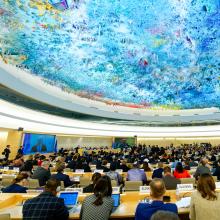
On January 22, 2024, Saudi Arabia’s human rights record was examined before the UN Human Rights Council (HRC) during its fourth Universal Periodic Review (UPR). Ahead of the review, MENA Rights Group submitted a report outlining the scope of Saudi Arabia’s international obligations and cooperation with human rights mechanisms, as well as key concerns regarding violations of the right to life, liberty, and security, and fundamental freedoms in the context of counter-terrorism frameworks.
In July 2024, Saudi Arabia informed the Council of its position on the 354 recommendations it had received, 83% of which it accepted. However, the Kingdom merely noted several recommendations to ratify international human rights mechanisms and to amend its domestic counter-terrorism framework, while it formally rejected recommendations to release detained human rights defenders (HRDs), to refrain from reprisals against them, and to repeal their travel bans.The outcome of the UPR was formally adopted on July 4, 2024 by the HRC.
Compliance with international standards and cooperation with the Human Rights Council
In January, the Kingdom had received 354 recommendations from 135 States on various issues including the right to freedom of expression, the prohibition of torture, and the death penalty. UN Member States also used this opportunity to call on the authorities to reform Saudi Arabia’s counter-terrorism framework.
While Saudi Arabia accepted all three recommendations to ensure its National Human Rights Institution (NHRI) complies with the Paris Principles, the Saudi Human Rights Commission (SHRC) still lacks the necessary independence that is essential for its effectiveness. In fact, the President of the SHRC herself, Ms. Hala al-Tuwaijri, represented the Saudi delegation during the UPR adoption session, as well as the initial UPR session in January, which constitutes a conflict of interest and inherently violates the pillar of independence stipulated by the Paris Principles.
Additional recommendations to cooperate with special procedures mandate holders and to ratify international agreements, namely the International Covenant on Civil and Political Rights (ICCPR) and the Convention against Torture (CAT) were simply noted by the Saudi delegation who affirmed it would consider ratifying them. This is especially important as torture is often used throughout capital proceedings to extract and coerce confessions.
The use of the death penalty
Despite having one of the highest execution rates worldwide, and using repressive legal frameworks, such as the Law on Combating Terrorism, to impose capital punishment, Saudi Arabia only noted - and will therefore take no steps to implement - recommendations to abolish the death penalty, as well as most recommendations to amend its counter-terrorism laws.
Right to freedom of expression and reprisals against human rights defenders
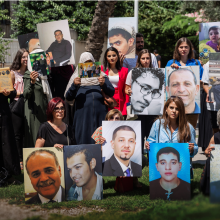
Saudi Arabia rejected all recommendations pertaining to HRDs, including recommendations from Belgium and Luxembourg to refrain from reprisals for interactions with the UN, and to release demonstrators, human rights defenders, and journalists currently detained for the peaceful exercise of their right to freedom of expression. The Netherlands’ recommendation to repeal travel bans for individuals who have served their prison sentences was also rejected.
The Kingdom explained its decision by citing unfounded allegations, despite substantial documentation by civil society organisations of reprisals and other measures taken by Saudi authorities against individuals for their peaceful human rights activities, including their engagement with UN mechanisms. Documented cases include those of Dr. Mohammed al-Qahtani, women’s rights activists Manahel al-Otaibi and Loujain al-Hathloul, and journalist Bader al-Rashed.
Next steps
Saudi Arabia’s high acceptance rate does not guarantee full implementation, and the rejection of crucial recommendations pertaining to the crackdown on human rights defenders continues to be a cause for concern. MENA Rights Group calls on Saudi Arabia to comply with its international human rights obligations and to take actionable steps towards concrete reforms ahead of its next review in 2028.